Back to the Future -- In honor of Encyclopedia Britannica giving up its print edition Post date  04.11.2012, 9:19 PM

posted by bob stein


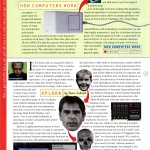
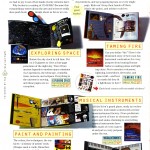
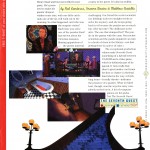
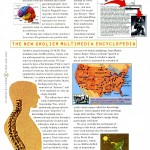
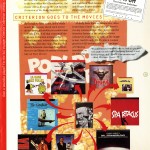
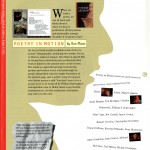
These drawings date from 1982 (thirty years ago). Alan Kay had just become the Chief Scientist at Atari and he asked me to work with him to continue the work I started at Encyclopedia Britannica on the idea of an Intelligent Encyclopedia. We came up with these scenarios of how the (future) encyclopedia might be used and commissioned Glenn Keane, a well-known Disney animator to render them. The captions also date from 1982.

The most interesting thing for me today about these images is that although we foresaw that people would be accessing information wirelessly (notice the little antenna on the device in the "tide pool" image, we completely missed the most important aspect of the network -- that it was going to connect people to other people.


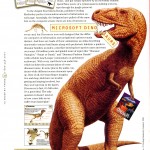
Children in the dinosaur exhibit at the Museum of Natural History carry Intelligent Encyclopedia's with headphones around instead of audiotape players. Interactive simulations of dinosaur life from the IE are running on the wall monitors.
dinosaur Atari.jpg


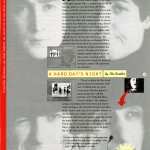
A father reminisces with his son about '60's Rock and Roll, calling up footage from the Beatles appearance on The Ed Sullivan Show from the Intelligent Encyclopedia
rock_and_roll_dad Atari.jpg


A vintner in northern California wonders what would be involved in changing wine production to sake. On horseback he is asking the Intelligent Encyclopedia about soil and water requirements for growing rice.
rancher_on_horse Atari.jpg


An earthquake wakes a couple in the middle of the night. The Intelligent Encyclopedia, connected to an online service informs them of the severity of the earthquake and makes safety tips readily available.
earthquake Atari.jpg


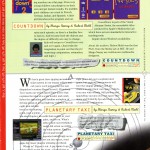
A third grade class studies various aspects of space travel. The group on the right is running a simulation of a Mars landing while the students on the left are studying a design for a spacecraft.
classroom Atari.jpg


A business man on his way to New York, reviews stockmarket trends.
businessman_on_plane Atari.jpg


In a bar, the two men at the right are watching football on the screen and running what-if simulations on the countertop Intelligent Encyclopedia which second guess the quarterback. The couple on the left is taking an on-the-spot course in wine connoisseurship.
bar_games Atari.jpg


An architect in New York studies Japanese motif for a project he's working on, while a teacher in Toyo talks with her class about western architectural styles.
architect and teacher Atari.jpg


A mother and her children looking into a tidepool in Laguna ask the Intelligent Encyclopedia about the plants and animals that they see. [Notice the antenna for cellular communication.]
tidal pool atari.jpg

PermalinkComments (6)
tags:

Mobility Shifts Conference at The New School Post date  08.30.2011, 12:02 AM

posted by bob stein

I think this is going to be a terrific conference.

MobilityShifts: An International Future of Learning Summit
The New School in NYC
October 10-16, 2011

The New School presents the second event in its Politics of Digital
Culture conference series "MobilityShifts: An International Future of
Learning Summit." Comprised of a conference, hands-on workshops, project
demonstrations, exhibitions and a theater performance featuring youth
and educators from New York City and Chicago, MobilityShifts is a
week-long summit in October 2011. MobilityShifts makes unexpected
international connections between the theories of Jacques Rancière and
Ivan Illich, learning projects outside the bounds of schools and
universities, mobile platforms, and the Open Web. Stop, reflect, listen,
discuss, and build with artists, media scholars, policy makers,
students, technologists, teachers, librarians, legal scholars and
learning activists from 21 countries.

http://mobilityshifts.org/conference/program/

REGISTRATION
To attend MobilityShifts you must register.
The early bird rate ends on September 15th.
http://www.mobilityshifts.org/register1


Participants include: Eduardo Ochoa, Hal Plotkin, Cathy Davidson,
Michael Wesch, Oliver Grau, Mimi Ito, Henry Jenkins, Anya Kamenetz,
Geert Lovink, Shin Mizukoshi, John Palfrey, Irit Rogoff, Juliana Rotich,
Benjamin Bratton, Katie Salen, Shveta Sarda, Molly Steenson, Elizabeth
Losh, Tony Conrad, Lev Manovich, Torsten Meyer, Jan Schmidt, Tomi
Ahonen, Beth Coleman, John Willinsky, Siva Vaidhyanathan, Alexander
Halavais, Giselle Beiguelman, David Carroll, Tania Bustos, Kate
Crawford, Chris Csikszentmihalyi, Sean Dockray, Rolf Hapel, Juan Manuel
Lopez Garduno, Daria Ng, Chris Lawrence, Josie Fraser, David Theo
Goldberg, Marisa Jahn, Sam Gregory, Shravan Goli, Manu Kapur, Edward
Keller, Eric Kluitenberg, Jairo Moreno, Michael Pettinger, Michael
Preston, Daniela Rosner, Richard Scullin, Ramon Sanguesa, Elaine Savory,
Luis Camnitzer, Nishant Shah, Janek Sowa, Dan Visel, Nitin Sawhney and
many others.

Summit Chair
Trebor Scholz

Co-Chairs: Edward Keller, Elizabeth Losh, Matthew K. Gold, David Theo
Goldberg , Karen DeMoss, Sean Dockray
Producer: Jennifer Conley Darling
Associate Producers: Caroline Buck, Liz Carlson

Selected workshops: http://mobilityshifts.org/workshops/
(Workshops require an additional reservation at no extra cost).

This summit builds on two previous events: Mozilla's Drumbeat Festival
in Barcelona (2010) and Digital Media and Learning in Los Angeles
(2011). MobilityShifts is sponsored by The John D. & Catherine T.
MacArthur Foundation, The New School and the Mozilla Foundation. We
gratefully acknowledge our partners: American University of Paris,
Carnegie Mellon University, Eyebeam Art & Technology Center,
Goethe-Institut, HASTAC, Japan Society, MetaMute, Prezi, School of the
Art Institute of Chicago, SocialText, UC San Diego's Sixth College, and
University of Pennsylvania.

PermalinkComments (0)
tags:

in honor of the centenary of marshall mcluhan's birth Post date  07.21.2011, 9:52 AM

posted by bob stein

Here are three short clips. And there's a ton more at this wonderful site, Mcluhan Speaks


1960: "We're just trying to fit the old things into the new form."


1968: "There's no longer any gap between the campus and wall street"


1977: "Another strange effect of this electric environment is the total absence of secrecy"

PermalinkComments (1)
tags:

an observer worth paying attention to Post date  07.19.2011, 2:37 PM

posted by bob stein


James Bridle continues to be one of the most interesting observer/bloggers about books -- both print and not

http://booktwo.org/notebook/items-received-by-post/

PermalinkComments (0)
tags:

add this to the list of future(s) of the book Post date  05.08.2011, 4:40 PM

posted by bob stein

The Book Xylophone

PermalinkComments (0)
tags:

IDPF meeting in may Post date  04.28.2011, 10:20 AM

posted by bob stein

Bill McCoy has assembled a mouth-watering schedule of the International Digital Publishing Forum IDPF meeting on 23-24 May during Book Expo in New York. registration info and full program at http://idpf.org/digitalbook2011.

The program includes a special keynote from multiple Hugo and Nebula award-winning best-selling science-fiction authors Neal Stephenson and Greg Bear, who will discuss their experience with The Mongoliad, a ground-breaking project in direct-to-consumer and community-augmented online serial publishing.

Confirmed speakers and session topics include:

"The Year of the eBook" - Abe Murray, Google; Yoshinobu Noma, Kodansha

"Publishers Roundtable" - Dominique Raccah, Sourcebooks; Richard Nash, Cursor/Red Lemonade (formerly of Soft Skull Press)

"Special Keynote: The Mongoliad, Year One - a ground-breaking investigation into the future of publishing" - Neal Stephenson and Greg Bear, Subutai Corporation

"Creating Highly Accessible Interactive Content" - Liza Daly, Threepress Consulting

"International Market Opportunities" - Cristina Mussinelli, Italian Publishers Association;
Ronald Schild, MVB Marketing/German Book Publishers Association

"EPUB 3 First Look" - Bill McCoy, International Digital Publishing Forum

"Update on eReading Devices & Apps" - Mary Tripsas, Harvard Business School; Allen Weiner, Gartner; Mitch Weisberg, Sawyer Business School

"Transforming the Business of Publishing"- Lisa McCloy-Kelley, Random House; Ken Brooks, Cengage Learning; Bob Young, Lulu.com

"Breakthrough Business Models" - Theresa Horner, Barnes and Noble; Justo Hidalgo, 24symbols; TJ Waters, Autography

"Metadata Boot Camp" - Bill Kasdorf, Apex; Mark Bide, Editeur; Beat Barian, Bowker

"Lending of Digital Books" - Peter Brantley, Internet Archive, Erica Lazzaro, OverDrive

"Wrangling the Backlist" - Jonathan Hevenstone and Herve Essa, Jouve Group; Sririam Panchanathan, Aptara

"The Future of Digital Reading and the Business of Digital Publishing" - Masaaki Hagino, Voyager Japan, Inc.; Brad Inman, Vook; Peter Balis, John Wiley

"eBook Production Jumpstart" - Josh Tallent, eBook Architects

"Distribution Update" - Andrew Weinstein, Ingram; Bob Nelson, Baker & Taylor

"The Future of EPUB" - George Conboy, Google; Markus Gylling, DAISY Consortium

"Book Industry Study Group Consumer Research Findings" - Steve Paxhia, Beacon Hill Strategic Services

"Social/Direct Marketing: Case Studies from Publishers and Authors" - Malle Vallik, Harlequin Enterprises, Ltd; Sol Rosenberg, Copia

IDPF Digital Book 2011 is being sponsored by industry giants like Adobe, Aptara, Baker and Taylor, Book Business, Ingram, Innodata Isogen, OverDrive, LibreDigital, MeeGenius, Publishers Weekly and SPi Global.

PermalinkComments (0)
tags:

Persistence: A Rich-Media Fiction Post date  04.09.2011, 12:29 PM

posted by bob stein

Eric Kraft is a wonderful writer with a penchant for exploring new ways to express ideas. He's just announced a new project on KickStarter where he's trying to raise some funds. Here's the video intro. There's quite a bit more detail on the KickStarter site.

Permalink
tags:

shift happened Post date  03.23.2011, 11:44 PM

posted by kim white

I do my reading almost exclusively on screen. I've got a kindle, an ipad, an iphone, a blackberry, and a laptop, but this weekend, I did something radical and old school, I checked a big thick book out of the library and attempted to read it.

This is going to sound incredibly lazy, like someone who gets in their car to drive a few blocks rather than walk, but the physicality of the book, having to hold it open then lift and turn each page, was a lot more exhausting than I remembered. All of that holding and lifting and turning distracted me from the act of reading, took me out of the story if you will. A few pages into it I gave up, logged in to Amazon, and bought the Kindle book.

Like many people, I've romanticized the feeling of paper books, so I was surprised at how easily I spurned the one used to love. I've been watching the evolution of reading devices for the last seven years, but it was the experience I had with this library book that made me realize that the shift is no longer about to take place, it has taken place. Other readers are switching allegiance from paper to screen as quickly and irreversibly as I did. What does this mean for the publishing industry? For bookstores? For libraries? How will they reinvent themselves to attract screen-smitten readers?
PermalinkComments (15)
tags: e-books, ebook, ebooks

read in order to live Post date  02.23.2011, 10:48 PM

posted by bob stein

My 88 year-old mother, an avid reader, said that the last seven books she's read were in the Kindle reader on her iPad. When asked what she likes most about e-reading, she answered . . . a) being able to read in the dark so as not to disturb my father and, b) the online dictionary which she uses extensively.

And then my mother's fortune cookie said "Read in order to Live"


PermalinkComments (0)
tags:

the future of marginalia is bright (not dim) Post date  02.22.2011, 4:27 PM

posted by bob stein

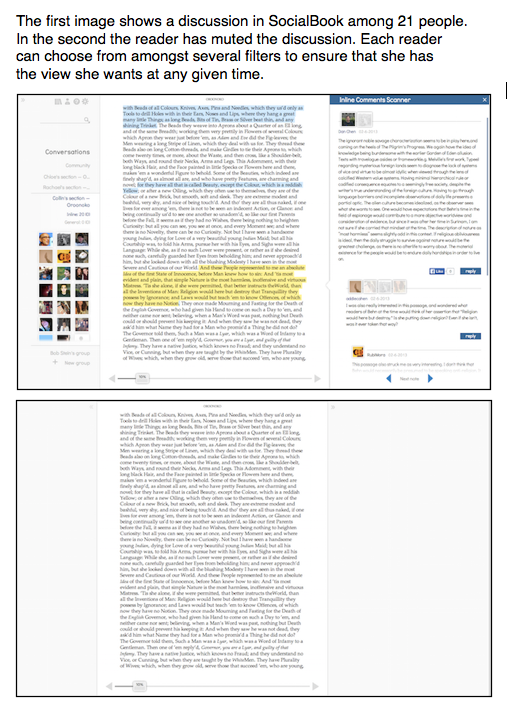
The New York Times hit a hot-button with yesterday's article on the "dim future" for marginalia as books go electronic. As you might imagine, I think marginalia is alive and well in the digital era. If you haven't seen it yet, check out the complex discussion conducted by seven women over the course of six weeks in the margin of Doris Lessing's The Golden Notebook.

PermalinkComments (3)
tags:

wikileaks as a harbinger of strange times Post date  12.10.2010, 12:01 PM

posted by bob stein

Wikileaks is turning out to be a profoundly interesting phenomenon. The questions it raises about communication in the age of the internet, particularly in the context of an ever-weakening U.S. empire, are so new and so complex that people and organizations who normally don't have too much difficulty figuring out what side of a problem they are on, are scrambling for purchase on unsure ground.

Geert Lovink and Patrice Riemens' Twelve Theses on Wikileaks is one of the more thoughtful pieces I've read so far.

PermalinkComments (0)
tags:

a defense of pagination Post date  12.09.2010, 3:37 PM

posted by bob stein

Joseph Pearson of Inventive Labs, the developer of Monocle Reader and Booki.sh recently wrote an eloquent explanation of why we should bother to maintain some form of pagination even in the digital era. [this originally appeared on the private Read 2.0 list serve, re-posted here with permission.]

I'm perplexed by the suggestion that we chose pagination "for the sake of tradition", since pagination is the one and only difficult problem with building a browser-based reader. It's actually the only thing Monocle does, and I didn't waste this year doing it without reflecting on it.

I'm delighted by the proposal that someone should build a serious scrolling browser-based reader, because I'll have somewhere to send people who ask this question. And I'm greatly amused by the idea that we should inplement both modes and make it the reader's choice -- as if a responsible software designer COULD actually shrug their shoulders and say "Damned if I know, you decide."

The software designer has to make the call -- has to ask: "what is the best way to read content with these characteristics?" I've spent a lot of time thinking about it. Back in March I wrote up some notes on it, but didn't publish them. I've pasted them below.

Nb: Monocle has a scrolling mode for "legacy browsers" that attempts to get around the problems with scrolling described here. Open a Booki.sh book in a recent Opera to see it. I've been told it "sucks" (thanks Blaine!), which is probably true.

-----

I love it when old user interface metaphors, veterans of a pre-digital era, comfort food for the catastrophe, are suddenly usurped by a better mode, one that takes advantage of all the opportunities of a free graphical user interface, one that really has no necessary real-world analogy. I love it because it proves our readiness for the world that confronts us, and I secretly love it because [December: some line about old people redacted].

So pagination of text is a big bold target, right in front of us. On the surface of things, dividing text into pages chains us to an old and unnecessary constraint: the dimensions of a printed page.

I agree with that -- to an extent. But the obvious answer to it (one that now also has a long history) has some problems. This answer says that I'm going to give you an infinite y-plane (at least), which you will move up and down through by scrolling, dragging or more recently flicking.

Let's put it under the umbrella term 'scrollable'. Scrollable content works very well for two or three screenfuls of content, because it lets you adjust, pixel by pixel or line by line, to your changing context. You can say "I want this thing on the screen, and this nearby thing on the screen at the same time", which is often useful -- particularly if the content has varied elements like buttons and links and images as well as text. That is to say, scrollable content generally works very well for web pages.

But for anything of real length, it is seriously hard work. It's important to realise what you're doing when you're scrolling. You're gazing at the line you were reading as you draw it up the screen, to near the top. When it gets to the top, you can continue reading. You do this very quickly, so it doesn't really register as hard work. Except that it changes your behaviour -- because a misfire sucks. A misfire occurs when you scroll too far too rapidly, and the line you were reading disappears off the top of the screen. In this case, you have to scroll in the other direction and try to recognise your line -- but how well do you remember it? Not necessarily by sight, so immediately you have to start reading again, just to find where you were.

If that doesn't sound familiar, it's because you've been burnt by it a few times, and have long ago adjusted your behaviour. Instead what you do is scroll so that the line you're reading is higher up, but still nowhere near the top, so that a misfire can't occur. You almost never scroll a screenful at a time -- typically you scroll clusters of five to fifteen lines. But what's the outcome of this? You're doing a whole lot more work, interacting far more often than for a simple page turn.

With zoomable touch interfaces, like MobileSafari, this has a bigger impact, because every time you scroll the zoomed-in content you're reading, there's a chance you'll flick at just slightly the wrong angle and cause the content to crop on one edge, making it temporarily unreadable. The effect is annoying.

Beyond this, even if you have startling accuracy, still you are doing a lot of work, because your eyes must track your current line as it animates across the screen. For sustained reading, this quickly gets physically tiring.

Pagination works for long text, not because it has a real-world analogy to printed books or whatever, but because it maximises your interface: you read the entire screenful of text, then with a single command, you request an entirely new screenful of text. There's very little wastage of attention or effort. You can safely blink as you turn.

If you're clever, there's one affordance you could add to a pagination interface: the ability to linger over the last line during the execution of the command to see the new screenful. This gives us a greater sense of efficiency, of reading and turning at the same time, which scrolling in its kindest assessment can sometimes achieve.

-- J

PermalinkComments (10)
tags:

a test of the Internet Archive's new embeddable reader Post date  12.09.2010, 3:09 PM

posted by bob stein

PermalinkComments (0)
tags:

anniversary Post date  12.07.2010, 10:53 AM

posted by bob stein

today marks the sixth anniversary of the first post on if:book -- "Three Books That Influenced Your World View"

and a day later, an exchange with Alan Kay about the list

PermalinkComments (0)
tags:

excellent review of social reading Post date  12.01.2010, 10:47 AM

posted by bob stein

Kassia Krozser has posted a long thoughtful piece on social reading.

As much as the idea of enhanced ebooks brings the sexy to publishing, it doesn't really do much for most of the books published. Enhanced, enriched, transmedia, multimedia...these are ideas best applied to those properties that lend themselves to multimedia experience (or, ahem, the associated price tag). While many focus on the bright and shiny (and mostly unfulfilled) promised of apps and enhanced ebooks, the smart kids are looking at the power of social reading.

PermalinkComments (0)
tags:

reading and writing -- LIVE Post date  11.26.2010, 10:51 AM

posted by bob stein

at 9am this morning MCM kicked off a 3-day experiment in LIVE social reading and writing.

PermalinkComments (0)
tags:

what i've learned since posting a proposal for a taxonomy of social reading Post date  11.10.2010, 9:25 PM

posted by bob stein

a little less than three weeks ago in conjunction with the Books-in-Browsers meeting at the Internet Archive, i posted a proposal for a taxonomy of social reading. here's a brief summary of what i've learned from the discussion so far.

Process
People are very resistant to leaving comments in a public space. There was a much more extensive discussion of this draft on the private Read 2.0 listserve than what you see in the public CommentPress version. i begged people on the listserve to post their comments on the public version, but with few exceptions no one was willing. The really sad thing from my pov is that by refusing to join the discussion in CommentPress, people deprived themselves of the opportunity to experience category 4 social reading first hand. I am very respectful of many of the people on the read 2.0 list and would have loved to have had their first-hand reactions to the experience of engaging in the close-reading of an online document with people whose views they value.

The resistance to public commenting isn't surprising; it's just not yet part of our culture. Intellectuals are understandably resistant to exposing half-baked thoughts and many of them earn their living by writing in one form or another, which makes the idea of public commenting a threat to their livelihood. [I've long proposed the inverse law of commenting on the open web -- the more you'd like to read someone's comments on a text, the less likely they are to participate in an open forum.]

Changing cultural norms and practices is a long haul.

Content
The comments I did get, privately and on the CommentPress site, helped me realize that, the first draft needs lots of work.

Several people pointed out that the focus on "reading" obscured the fact that the flip side of "social reading" is "social writing." Think of it this way. When i put the draft up in CommentPress i thought i was offering people a chance to experience "social reading." It's obvious to me now that the public comments people left are not only a permanent part of this draft -- a part of the work itself -- but also extremely helpful to me in terms of making version 2.0 stronger. this is indeed not just not just "social reading." it is also collaborative thinking and writing.

This has interesting rights implications. In my speech at the recent Books-in-Browsers meeting i suggested that readers "own" their annotations and have to have the right to export and transport those annotations to other environments. I now realize that's simplistic. if a reader has made comments in the margin AND specified that those comments should be public, the "ownership" of those comments has to be shared with the author or publisher. Since those comments become part of the public record, the author or publisher should have the right to include them forever as part of the work. However, the reader who made the comments must have the right, in perpetuity, to take those comments with them to other reading environments and places of conversation. if a reader specifies that comments are not to be made public, then it seems that the author/publisher has no right to do anything with them.

The second serious problem with version 1.0 is that its structure strongly implies that category 4 social reading, conversations that occur IN the margin, are the "highest form" of social reading. That's just plain wrong. People read and write in order to play a role in their culture and time. Mysteries or romance novels have a cultural point of view that forms the background for the plot and communicates a world view. From this perspective, even reading "for pleasure" is in part a way of looking at an aspect of society through someone else's eyes. If a central purpose of reading is to engage with the issues of the day, then a platform for close reading is best seen as a valuable tool, useful in helping readers join a broader discussion. put another way; if the comments and ideas someone writes in the margin never make it out, then it's like a tree falling in the forest that no one hears. [note: yes i understand that the private thoughts someone has while reading, may show up later in public forums. i'm trying to make a point about how much more valuable the comments written in the margin become when they escape the private tributary and join the river of public discourse.]

A big thank you to everyone who has chimed in. it's been a wonderful example of how social reading and writing can help elucidate complex problems.

PermalinkComments (8)
tags:

lost book sales Post date  11.08.2010, 8:57 AM

posted by bob stein


Jane Litte recently launched lostbooksales.com, a site where readers tell the tale of how a publisher lost a sale because a book wasn't available in a certain territory or format. While lostbooksales.com is a valiant effort to collect and codify examples of friction in the current supply chain, I think it's important not to exaggerate how much of the problems facing publishers are a function of the mismatch between an outdated rights structure and the electronic distribution pipe which is technically geography agnostic and format flexible.

Jane explains that the motivation for the site came from a comment someone named Suze posted on her DearAuthor blog

If I had the time and computer savvy, I'd set up a lostebooksale.com site where people could submit each book they didn't buy, and why. After the first three or four hundred stories about "I didn't buy Book X because it's not available in my country, so I got a pirate copy", maybe somebody in publisher with the drive, imagination, and ability could prod the industry into action.

God knows publishers need to be prodded into action, but the action needs to be much more extensive than rationalizing rights. The shift from page to screen is taking place in a much broader context in which media consumption, in all it's rapidly proliferating forms, is moving from atoms to bits. And those bits all swim in the same sea and move through the same pipe. All of them competing for our attention.

I'd be keen to see lostbooksales expanded so that people could say "i didn't buy a book because i got the information i needed off a website, or because i figured i would rather watch Season 2 of The Wire, play World of Warcraft, or even read some of the classics which are now available free in almost every electronic format.

PermalinkComments (2)
tags:

a beautiful implementation of a book in a browser Post date  11.04.2010, 10:44 AM

posted by bob stein


The Monocle Reader, developed by Inventive Labs in Melbourne, demonstrates the potential of using HTML5 to create beautifully formatted books which display in a browser rather than a standalone app.

The Booki.sh reader from Inventive Labs on Vimeo.

PermalinkComments (4)
tags:

the web and our evolving sense of self privacy Post date  10.26.2010, 5:43 AM

posted by bob stein

John Battelle (first editor-in-chief of Wired) has written a very thoughtful piece on how our sense of self and privacy is evolving on the web. it begins as follows:

Are we are evolving our contract with society through our increasing interactions with digital platforms, and in particular, through what we've come to call the web?

I believe the answer is yes. I'm fascinated with how our society's new norms and mores are developing - as well as the architectural patterns which emerge as we build what, at first blush, feels like a rather chaotic jumble of companies, platforms, services, devices and behaviors.

Here's one major architectural pattern I've noticed: the emergence of two distinct territories across the web landscape. One I'll call the "Dependent Web," the other is its converse: The "Independent Web."
The Dependent Web is dominated by companies that deliver services, content and advertising based on who that service believes you to be: What you see on these sites "depends" on their proprietary model of your identity, including what you've done in the past, what you're doing right now, what "cohorts" you might fall into based on third- or first-party data and algorithms, and any number of other robust signals.

The Independent Web, for the most part, does not shift its content or services based on who you are. However, in the past few years, a large group of these sites have begun to use Dependent Web algorithms and services to deliver advertising based on who you are.

PermalinkComments (0)
tags: